WorkloadsFullySupported

You have read the proposal.
The rate, the term and the site are settled.
This is what the capacity looks like.
MicroLink
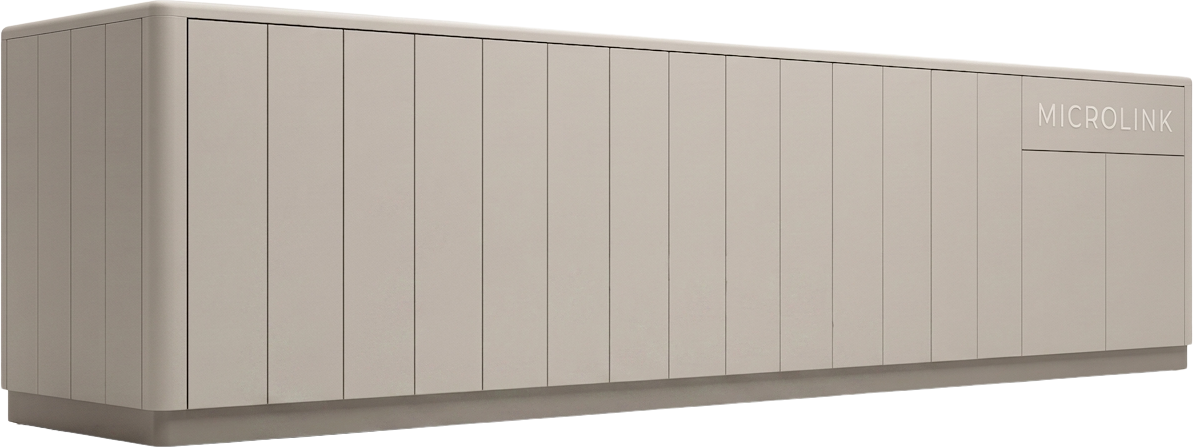
MicroLink pod
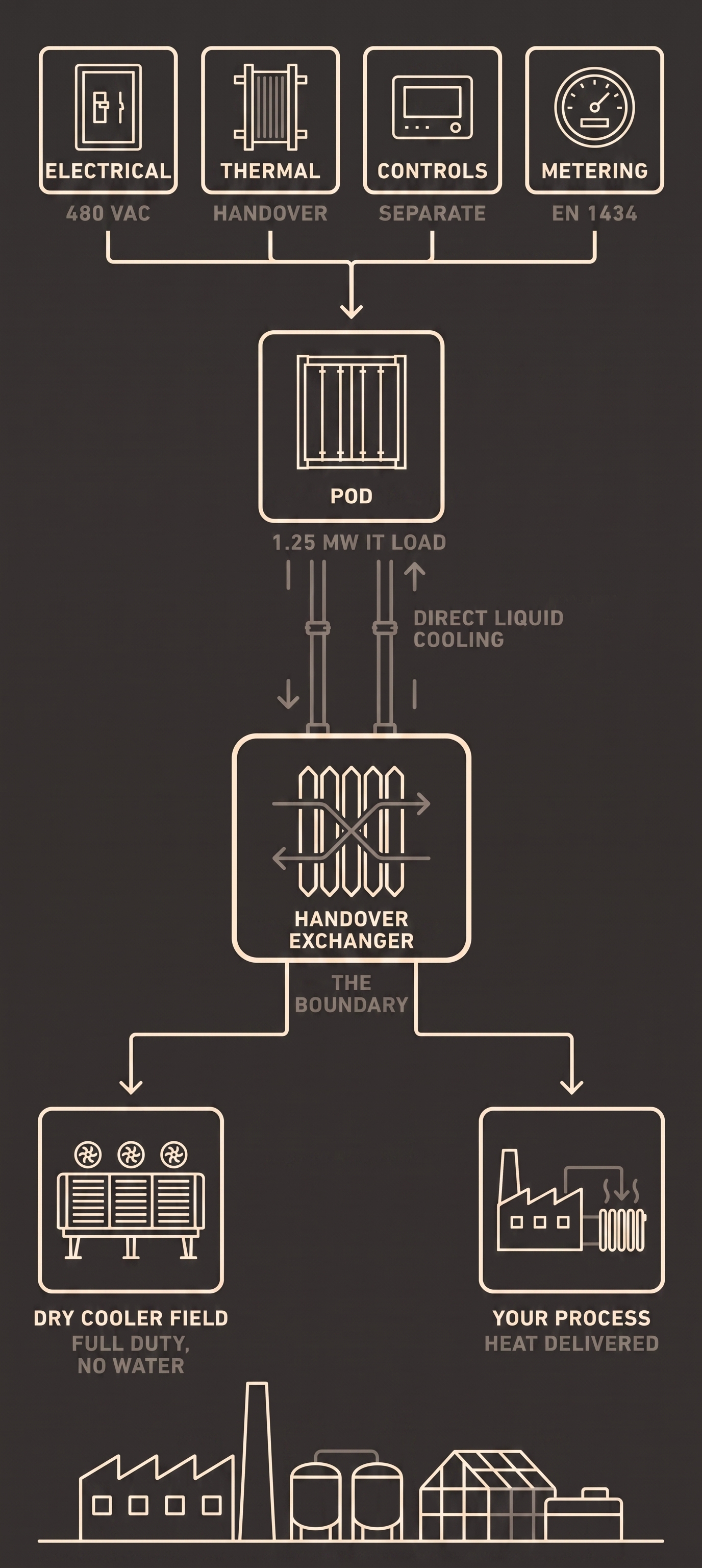
MicroLink energy and heat flow, from grid, solar, wind and battery through compute to the heat exchanger, district heating, wastewater treatment and farm.

The solution

Solution Design

Everything below starts from the workload rather than from a rack count. The thing that goes wrong in colocation is buying a shape that does not fit the platform about to be installed in it: density averaged across a hall that your densest rack then breaks, a fabric topology decided by someone who never saw your job sizes, a cooling window that sits outside what your platform publishes. The design pass happens before anything is signed, so if the block does not fit, that is the moment it surfaces.

Design pass:Pre signatureThe block is drawn against your platform rather than selected from a catalogue

01

The workload

  • We start from what you are running, meaning platform, rack count, density per position, fabric topology, storage and the date it has to be live
  • Density is designed per position rather than averaged across a hall, so a mixed estate does not pay for the cost of its densest rack across every rack
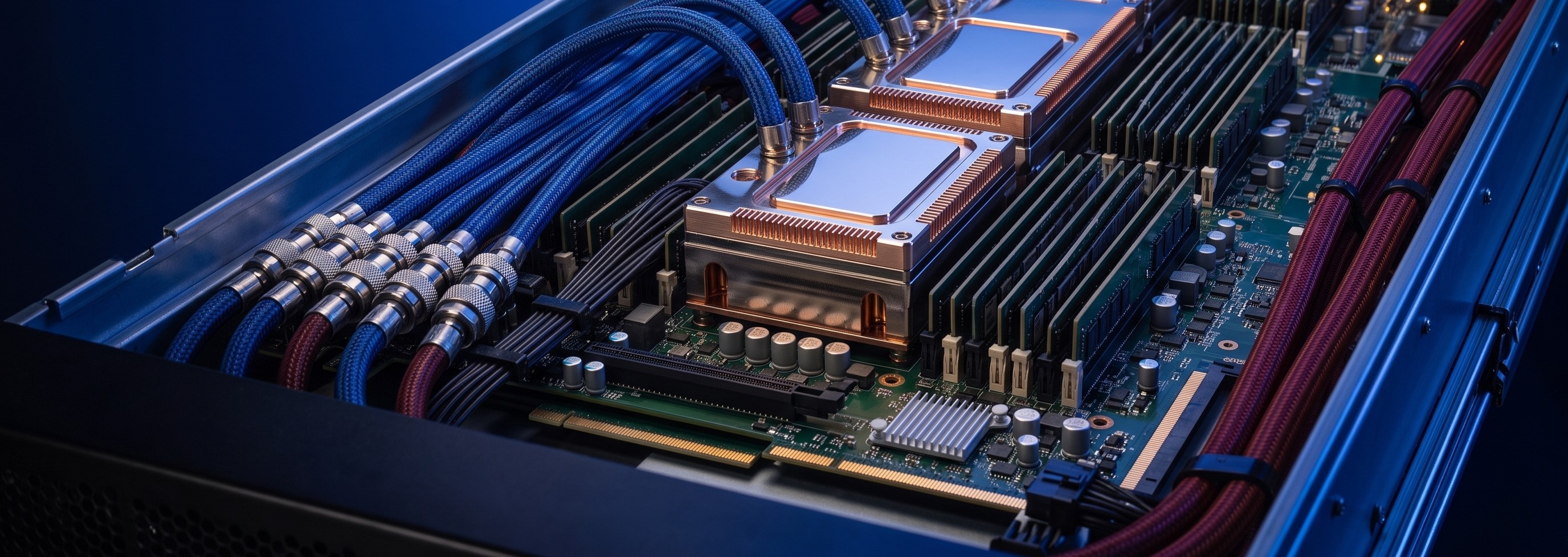
  • Cooling is direct to chip at a capture fraction of 0.85, on a loop held inside the supply window the platform itself publishes
  • Failure domains are drawn to your job size, so one fault does not take a synchronised run back to its last checkpoint across the whole block
Density:Per position50 kW to above 100 kW per rack position, mixed density inside one envelope

02

The block

  • 1.25 MW of IT load per pod, thirteen rack positions, repeating on one partner interface, or 10 to 45 MW contracted in halls and suites
  • Distribution is busway at row level rather than a power distribution unit per rack, so density can change later without rework
  • Structure is designed to the concentrated rack case, not to an averaged floor loading
  • The dry cooler field is sized to full duty, so your availability never depends on the host partner choosing to take heat
Change control:YoursNo change to your block without your written approval, for the life of the term

03

The interfaces

  • Three demarcations and no more: one electrical, one network, one thermal. Each is drawn, agreed and signed before anything is built
  • The network handoff is defined at the boundary and written into the service order rather than described in a meeting
  • The monitoring points list is issued with the design, so you know exactly what you will be able to see before you commit to anything
  • Design freeze is the point capacity is contracted. Nothing is reserved against a drawing that is still moving

If the block does not fit the platform, the design pass is where that surfaces. That is the point of doing it before signature rather than after.

The sequence
Delivery and Operations

The ladder, edge to facility

01

Site Readiness

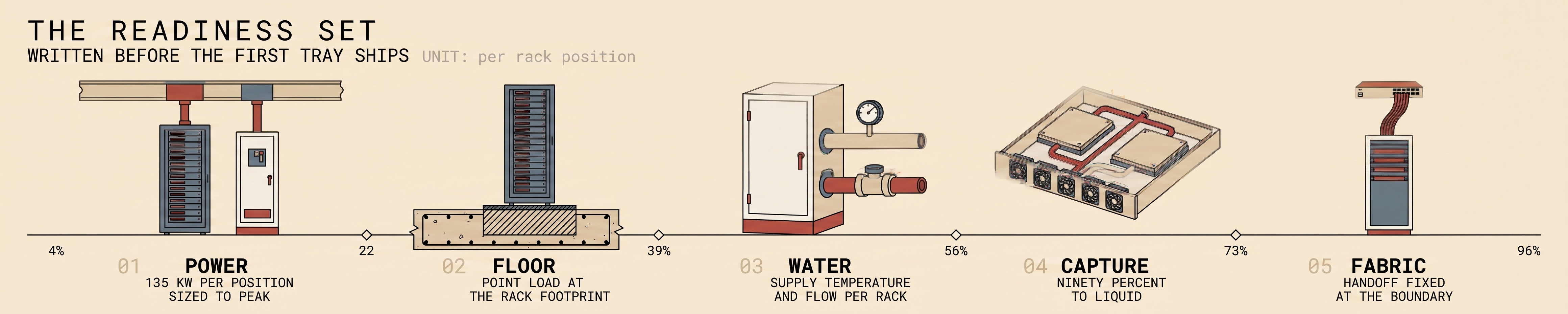
A rack at 135 kW is not a dense version of a 10 kW rack. It is a different building. Point load at the rack footprint, facility water supply temperature and flow per rack position, coolant distribution capacity held at N+1 at flow, and a power path sized to the peak rather than to the nameplate. Each of those is a number written into the service order before your first tray ships, so nothing about the block is discovered on the day the truck arrives.
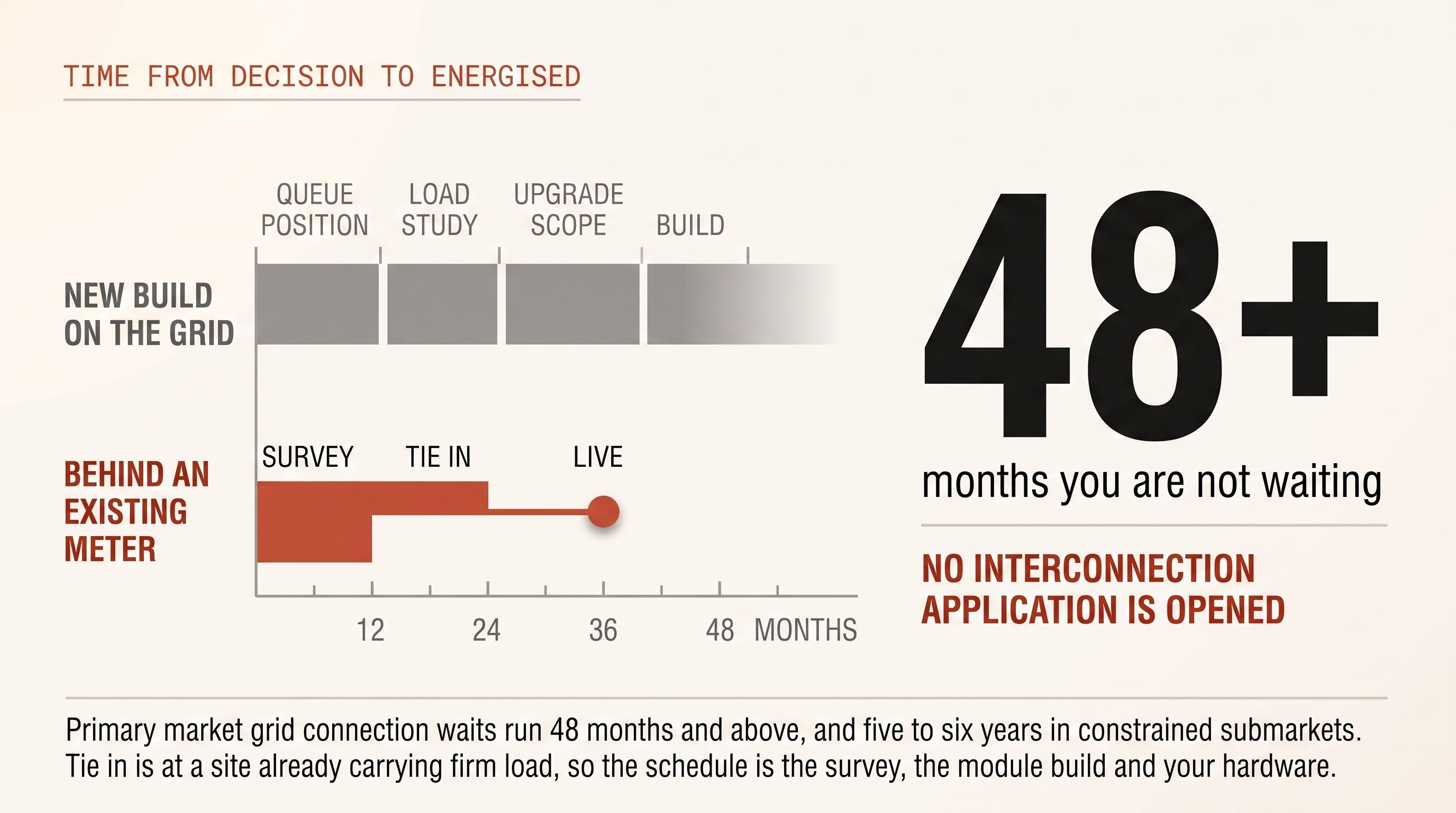
The tie in, five stages

02

Move In

Ready for service is not the same as your hardware racked and passing traffic, and acceptance here is written against the second of those. Delivery, staging, install, first power, commissioning, then an acceptance test you sign. Route survey, lift plan, staging space and packaging removal are ours. Remote hands are available from day one.
Who carries what, twelve obligations

03

Security

Four layers, and an honest statement of which of them a pod inside a partner facility carries and which it does not. Perimeter and site, building zoning with authentication at every boundary, identity and access with an audit trail for every door cycle, then the data hall and the rack itself. Certification sits as a schedule to the agreement rather than as a claim in a document.
What you pay for, week by week

04

Operations

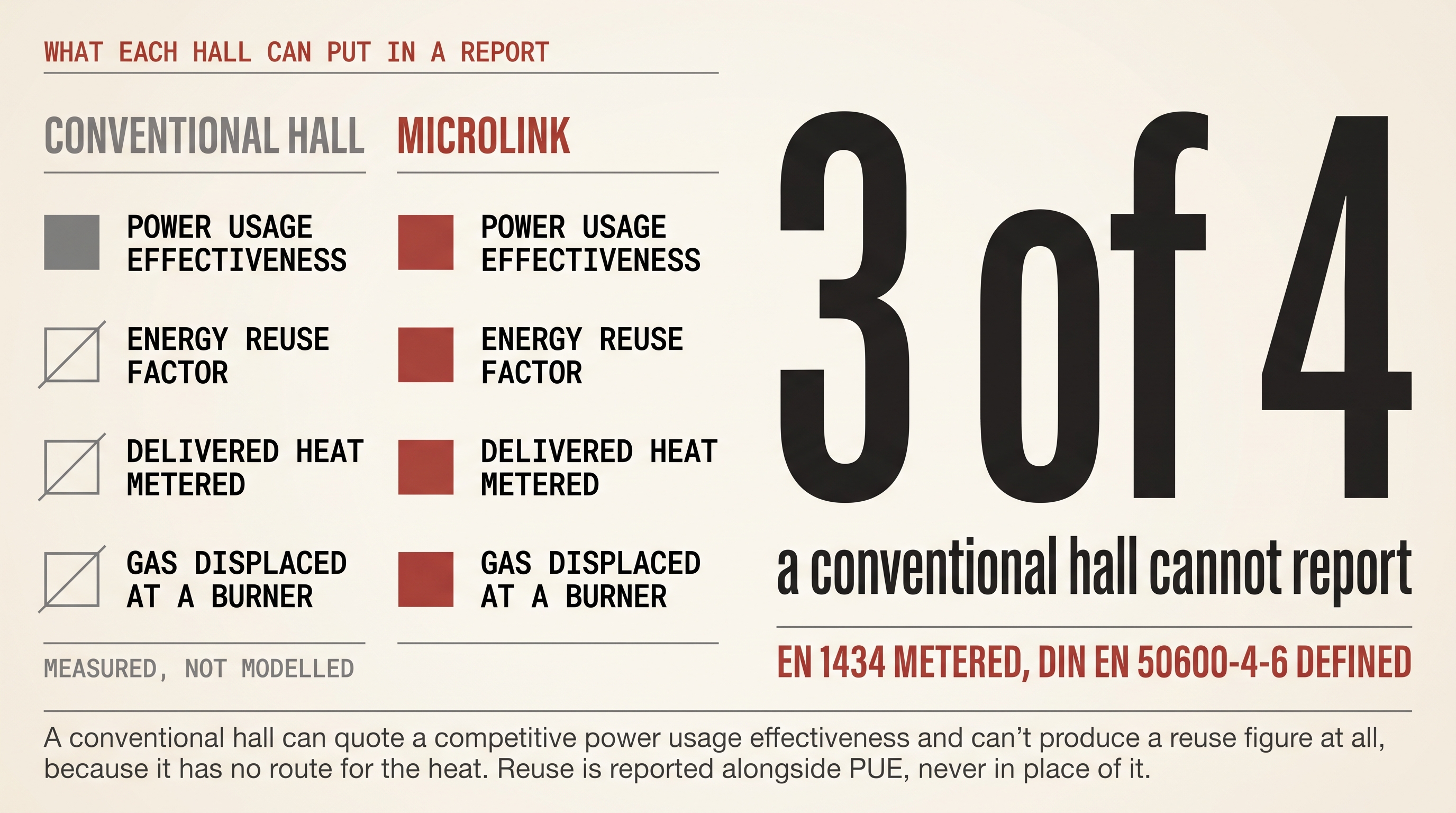
Fifteen years is a long time to live somewhere nobody told you how it runs. What you see is power at the block, temperatures across the loop, cooling circuit state, door events and the reuse figure. Escalation runs to named roles.

Next Steps

Bring the megawatts and the date

Contact